Choosing Personalized Books for Your Child's Questions and Interests
Browse stories about feelings, nighttime mysteries, and the Moon, with practical ways to follow the questions your child brings to a book.


In this article
What has your child asked about this week? A shape on the bedroom wall? Why someone looked sad? Why the Moon was out before dinner?
That question is a useful place to start choosing a book. Look for a story that offers somewhere interesting to go next.
First, what is personalized?
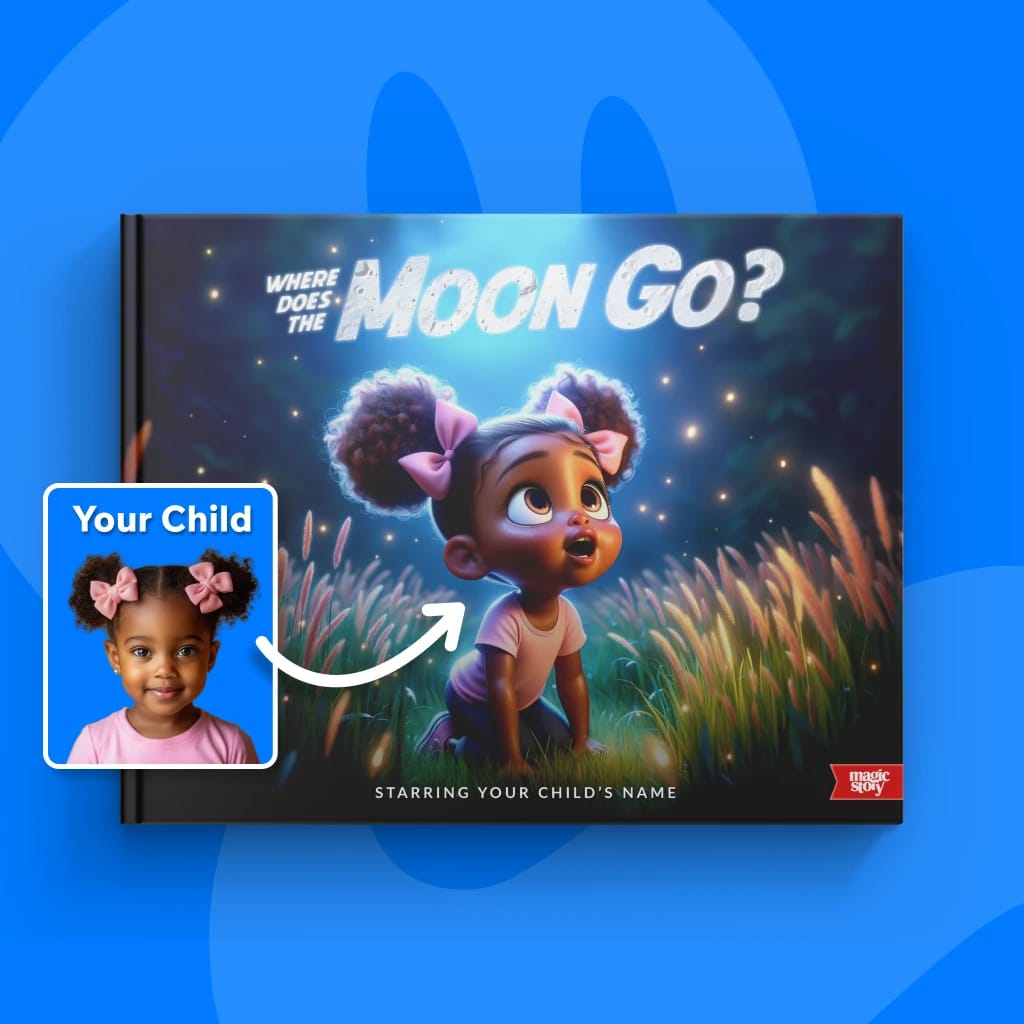
Magic Story offers existing stories with supported personalization, including the child's name and an illustrated likeness created from a photo. Browse the plots first, then explore the choices available for the title you like.
Review the character preview and the sample story as two separate things: "Does this look right?" and "Do we want this adventure?" Our buying guide covers the details.
For questions about feelings
The Emotion Emporium follows the child through rooms associated with feelings, with a fox and a sloth as guides.

Try asking which room they would like to explore. If your child connects it to something that happened, listen before interpreting. If they only want to talk about the animals, let that be enough.
For the child who wants to investigate a mystery
There's No Such Thing as Monsters uses a flashlight search through a house where ordinary sounds and shapes look suspicious.

Preview it carefully for a child sensitive to scary imagery. You could make a daytime game of identifying ordinary household sounds, such as a washing machine or a closing cupboard. Keep it playful and stop if it becomes unsettling.
For the person watching the sky
Where Does the Moon Go? begins with a telescope and a question about the Moon. A moth accompanies the child in the story.
On another day, look at the sky together when the Moon is visible. Draw the part you can see and note the date. For the real explanation, use the sources in our Moon article, rather than making up an answer to keep the conversation moving.
Leave room for an unexpected interest
A child can ignore the central theme and become fascinated by a tiny background detail. Follow it for a while. Ask, "What did you notice?" and let them show you.
A grandparent can keep a list of those questions for the next visit. Bring one library book or photograph related to a question, rather than a stack of assignments.
Keep a question for next time
Write down one thing your child wants to find out. It can guide your next library visit, a conversation with a grandparent, or another look at the same page.
Choose the adventure, look closely, and keep talking if the child wants to. Let their next question set the direction.
Questions parents ask
Does Magic Story write a new plot around my child's personality?
You choose from available stories and personalize the supported details. Do not assume the plot is newly written from the child's interests or experiences.
Which book should I choose for a curious child?
Start with the questions they already ask, then preview a related story. A child interested in the sky might enjoy a Moon or Sun adventure.
Should I buy a book to fix a worry?
Choose it as a story, with attention to the child's comfort. A book should not be expected to resolve persistent worry or replace individual support.


